

Is Discounted Apparel Always Low Quality?
Table of Contents
- The Truth About Discounted Apparel and Quality
- How to Spot Low Quality Clothing Before You Buy
- The Cost-Per-Wear Metric: Evaluating Real Value
- Why Retailers Discount Quality Apparel
- How to Shop for Quality on a Budget
- Is Fashion Nova Good for Quality at Discount Prices?
- Fast Fashion Manufacturing and Quality Decline
- Frequently Asked Questions
Last Updated: September 1, 2026
The Truth About Discounted Apparel and Quality
Not all discounts signal low quality. Some brands slash prices due to overproduction, others mark down seasonal inventory that's perfectly sound, and some use permanent discounting as their core business model. The difference matters, and it's entirely possible to find genuinely good apparel at discount prices if you know what to look for.
At World of Dreamy, we offer quality apparel that doesn't require paying full retail. Our pieces, like the Original Von Dreamy Black tee made from 100% organic cotton with taped seams, demonstrate that discounted doesn't mean disposable. The real skill is distinguishing between legitimate value and manufactured cheapness.

The relationship between price and durability isn't linear. A $15 shirt and a $50 shirt aren't always separated by quality; they're often separated by brand markup, marketing spend, and inventory management. Understanding why something is discounted is the first step to making smarter purchases.
How to Spot Low Quality Clothing Before You Buy
Signs of Poor Stitching and Seams
Garment construction reveals low-quality manufacturing most obviously. Run your finger along the seams. Quality seams are tight, consistent, and sit flat against the fabric. Loose, wavy, or puckered seams indicate rushed production or inadequate thread tension.
Check the shoulder seams especially; they carry the most stress during wear. Quality garments typically use dense stitching that feels secure and holds its shape; sparse stitching feels loose and flexes under pressure.
Look for reinforcement stitching at stress points like zippers, armholes, and pocket corners. Quality apparel uses double-stitching or box-stitch patterns; cheap manufacturing uses single-line stitching even at high-stress zones.
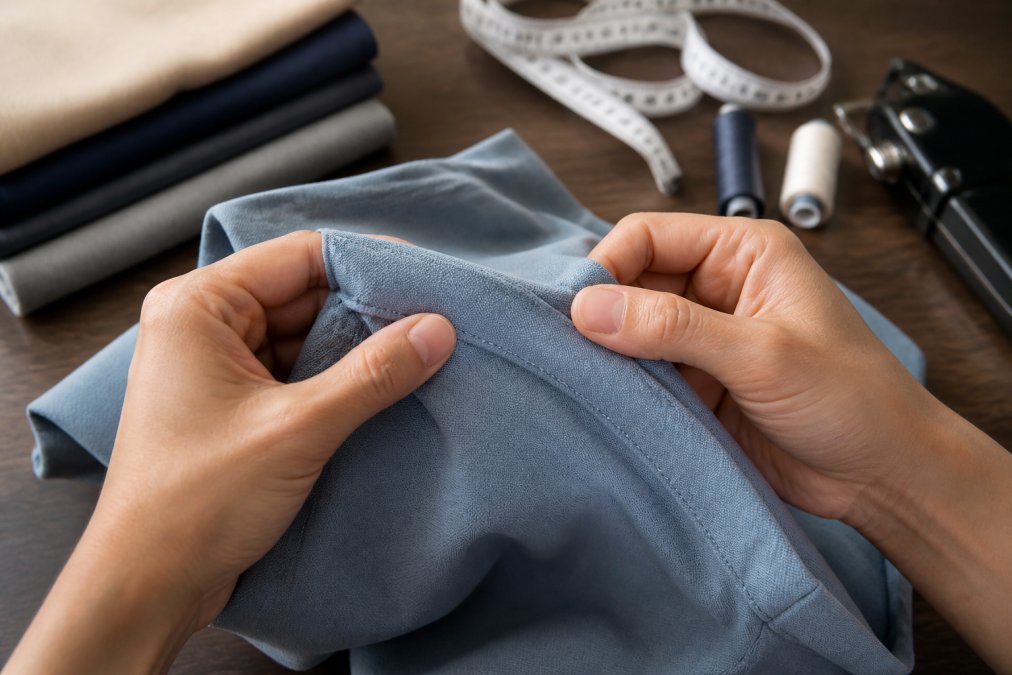
A quality hem is even, secure, and invisible from the outside. Poor hems are uneven, use visible contrasting thread, or have loose threads hanging. Check the inside of the hem; quality construction uses a clean, flat stitch without puckering or thread bunching.
Fabric Quality and Material Composition
Check the fiber composition first. 100% natural fibers are often more durable than synthetic blends, but an 80/20 cotton-polyester blend can be excellent quality (the FTC). A 50/50 blend often signals cost-cutting rather than performance optimization.
Feel the fabric. Hold the garment up to light. If you can see through it easily, the fabric is thin and will pill, fade, and wear quickly. Quality apparel uses densely woven fabric that blocks light and feels smooth and substantial, not papery or flimsy.
Excessive pilling after one or two wears signals poor fiber quality or weak fabric construction. Check for colorfastness by examining seams and hems; if the color is noticeably lighter there, the dye didn't penetrate evenly and the color will fade faster during washing.
Hardware Durability and Finishing Details
Zippers, buttons, and snaps are where manufacturers cut costs most aggressively. Quality zippers glide smoothly and feel substantial. Metal zippers (usually brass or aluminum) outlast plastic zippers by years. If the zipper feels flimsy or looks thin, the garment won't survive regular use.
Quality buttons are sewn with reinforced stitching on the back using a thread shank that prevents stress on the stitches. Cheap buttons are glued or sewn with minimal thread and pop off after a few washes. Look at the back of the button; quality construction uses a reinforcement washer underneath.
Press a snap; quality snaps have a satisfying click and hold firmly. Cheap snaps are loose, feel wobbly, or separate after a few uses. Quality apparel uses reinforced drawstrings (the Dreamy Zip Hoodie uses loop-tipped flat twill drawstrings, for example) that won't fray or tangle.

The Cost-Per-Wear Metric: Evaluating Real Value
Cost-per-wear reveals true value: divide the price by the number of times you'll realistically wear the item. A $100 jacket you wear 200 times costs $0.50 per wear. A $30 shirt you wear 10 times costs $3 per wear. By this metric, the expensive jacket is the better value.
Discounted apparel can have an excellent cost-per-wear ratio if it's durable. A $35 piece you wear 100 times beats an $80 piece you wear 50 times. The key is predicting longevity accurately using the inspection skills above.
Consider garment longevity when evaluating discounts. A discounted summer dress at $20 that you wear 30 times over three summers has a cost-per-wear of $0.67. A discounted winter coat at $60 that falls apart after one season has a cost-per-wear of $60 if you only wear it 10 times.
Fast-fashion retailers count on low cost-per-wear to justify poor durability, expecting items to fail after 5-10 wears. Quality discounted apparel flips this model. Brands like World of Dreamy discount because of inventory management or seasonal shifts, not because pieces are designed to fail.
Why Retailers Discount Quality Apparel
Seasonal inventory drives many discounts. Retailers buy heavy for peak seasons and need to clear inventory before the next season arrives. Summer clothes go on sale in August; winter coats go on sale in February. This has nothing to do with quality, it's pure logistics.
Overproduction creates another category of discounts. When sales underperform, brands discount to move inventory. The apparel is often identical to full-price versions.
Color or style changes force discounts too. Retailers discontinue colors or styles and need to clear stock. The apparel itself is fine; the retailer wants shelf space for new designs.
Off-price retailers buy overstock from department stores at wholesale prices. The discount reflects the retailer's business model, not lower quality.
Some brands use permanent discounting as their core strategy, pricing items high then immediately discounting them to create the illusion of savings. This doesn't necessarily indicate low quality, but suggests the brand prioritizes perceived value over honest pricing.
Manufacturing shortcuts are rare as a primary reason for discounts. Manufacturers discount to move excess inventory, not because they cut corners. Extremely cheap apparel (under $10) more likely reflects true cost-cutting in materials and construction.
How to Shop for Quality on a Budget
Inspecting Garments Before Purchasing
Physical inspection is non-negotiable when shopping discounted apparel. In-store shopping gives you the advantage. Hold the garment under good lighting, check the seams, feel the fabric weight, and test the zippers. Spend 60 seconds per item doing a thorough inspection.
For online shopping, request detailed photos before buying. Look for photos taken in natural light, which are more honest than studio lighting. Check the product description for fiber content and manufacturing details. Reputable retailers provide this information; brands hiding it often cut corners.
Read customer reviews specifically for durability complaints. Skip reviews about fit or style and focus on longevity. If multiple reviewers mention seams splitting, pilling, or fading after a few washes, that's a reliable signal of poor quality. Conversely, if reviewers mention wearing something 50+ times without issues, that's a strong endorsement.
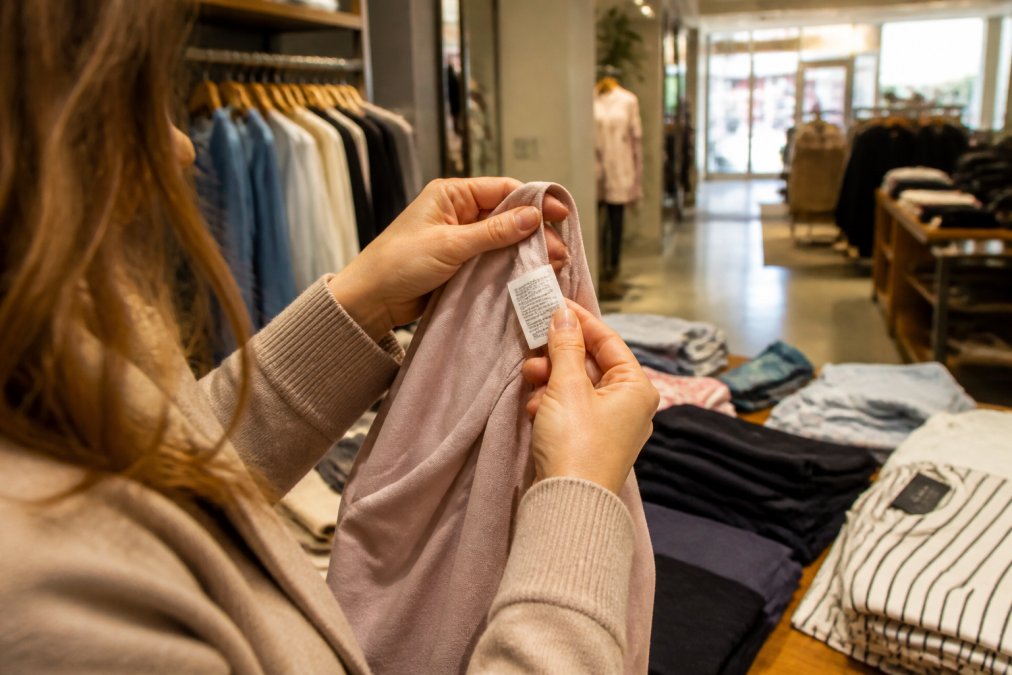
Return policies matter more than price. A $20 shirt with a generous return window is lower-risk than a $20 shirt with no returns. Quality retailers stand behind their products.
Understanding Clearance vs. Off-Price Inventory
Clearance inventory is merchandise a retailer wants gone. It's usually end-of-season or discontinued items from that retailer's own supply chain. Quality is typically identical to full-price versions; the discount reflects timing, not manufacturing.
Off-price inventory comes from different sources. Off-price retailers buy overstock, returns, or previous-season merchandise from department stores. The apparel is often identical to what sold at full price elsewhere. The discount reflects the off-price retailer's wholesale purchase price, not lower quality.
Fast-fashion clearance is different. A clearance item from a fast-fashion brand is still fast-fashion; the discount doesn't change the underlying quality. You're buying discounted cheap apparel, not discounted quality apparel.
The key distinction: Is this a quality brand clearing excess inventory, or a cheap brand clearing products designed to fail? That determines whether the discount represents genuine value or just a lower price on low-quality merchandise.
Is Fashion Nova Good for Quality at Discount Prices?
Fashion Nova operates on a fast-fashion model: trendy designs, rapid production cycles, and aggressive pricing. The brand prioritizes style and speed over durability. Apparel typically uses synthetic blends and thin fabrics optimized for cost, not longevity. Garments are designed to look good for a season or two, not years of wear.
For someone buying trend-driven pieces they'll wear 5-10 times, Fashion Nova represents decent value. For someone seeking durable basics, it doesn't. Fast-fashion brands operating at discount price points are usually building for short lifespans. That's not a quality failure, it's a business model.
Quality discounted apparel operates differently. World of Dreamy uses organic cotton, taped seams, and reinforced construction because we want pieces that last. The discount reflects our business model and inventory management, not a compromise on durability. The Dreamer Shorts use double-faced jersey material and 3-needle cover-stitch construction, details that signal quality regardless of price.

Fast Fashion Manufacturing and Quality Decline
Over the past 15 years, average garment quality has declined measurably (peer-reviewed research). Mass production has accelerated; garments that once took weeks to produce now move through factories in days (ilo.org). This speed reduces quality control opportunities.
Manufacturing shortcuts have become standard practice: single-line stitching instead of reinforced seams, thinner fabric to reduce material costs, and plastic hardware instead of metal. Quality brands maintain standards, but these shortcuts are common enough that many shoppers now accept garments that fall apart after a season.
The business model incentivizes this. Fast-fashion retailers make money on volume and turnover, not durability. If a customer buys a new shirt every season instead of every three years, the retailer profits. The entire system is optimized for frequent replacement.
This context explains why "is discounted apparel always low quality" feels true to many shoppers. They've been conditioned by fast-fashion to expect short lifespans. But the decline in average quality doesn't mean quality discounted apparel doesn't exist; it just means you have to look harder to find it.
Discounted apparel is not always low quality. But finding quality at discount prices requires real skill. Master the inspection techniques: check seams, feel fabric density, test hardware, and calculate cost-per-wear. Understand why items are discounted. Read reviews for durability signals. Recognize that some brands build quality apparel and discount it for legitimate business reasons, while others use discounting as cover for poor manufacturing.
The difference between a $30 shirt that lasts two years and a $30 shirt that lasts two months is knowledge. Shop with this framework, and you'll consistently find the former.
Frequently Asked Questions
Q: Does a lower price tag always indicate poor garment construction?
A: No. Discounted apparel can have excellent garment construction if it's a seasonal clearance item or overstock from a quality manufacturer. The key is inspecting seam integrity, stitch count, and fabric density yourself. Look for reinforcement stitching at stress points and taped seams, these indicate quality craftsmanship regardless of the price tag. A garment marked down 50% from a reputable brand often maintains the same construction standards as full-price inventory.
Q: What are the most common signs of low-quality apparel to avoid?
A: Watch for loose or uneven stitching, thin or flimsy fabric, pilling after light washing, and poor hem finishing. Check that seams are straight and reinforced, especially at the shoulders and underarms. Examine the fiber content label, synthetic blends without adequate natural fiber content tend to wear poorly. Test the fabric's tensile strength by gently pulling it; quality fabric resists tearing. Hardware like zippers and buttons should feel sturdy and move smoothly, not cheap or loose.
Q: How can you tell the difference between a seasonal clearance item and a cheaply made product?
A: Seasonal clearance items are typically last season's styles from established brands with consistent quality standards. They maintain the same construction, fabric density, and hardware durability as full-price versions, just different colors or patterns. Cheaply made products show signs of manufacturing shortcuts: thin fabric, uneven stitching, weak seams, and low-quality materials. Check the brand's reputation and compare the garment's construction details to full-price items from the same line. If a discount item has the same taped seams and reinforcement stitching as regular inventory, it's likely a legitimate clearance piece.
Q: Why do retailers offer deep discounts on high-quality apparel?
A: Retailers discount quality apparel for several reasons: seasonal inventory turnover, overstock from production runs, style discontinuation, and color variations that didn't sell as expected. Brands like World of Dreamy use strategic markdowns, such as the 25% discount offer, to clear inventory while maintaining customer value. Off-price retailers purchase excess inventory from quality manufacturers at wholesale rates, allowing them to offer significant savings without compromising garment construction or fabric quality. This is different from fast fashion manufacturing shortcuts; it's simply smart inventory management.
This article was written using GrandRanker
Leave a comment