

How to Find Exclusive Clothing Collections in 2026
Table of Contents
- What Defines an Exclusive Clothing Collection
- How to Find Unique Fashion Brands
- Where Limited Edition Clothing Drops Happen
- How to Verify Authenticity Before You Buy
- Best Big and Tall Clothing Brands to Watch
- Secondary Market and Archival Sourcing
- Conclusion
- Frequently Asked Questions
Last Updated: September 12, 2026
What Defines an Exclusive Clothing Collection
An exclusive clothing collection is a limited-run release of apparel produced in small quantities, sold through restricted channels, and often tied to a specific designer, city, or moment. Scarcity, craftsmanship, and access control separate it from mass-market fashion. At World of Dreamy, we build our own releases around that idea.
The distinction matters because "exclusive" gets thrown around loosely. A department store can call a marked-down rack "exclusive," but that label usually means "we bought it in bulk." Real exclusivity has three markers:
- Production limits. The run is capped, and the brand states the cap.
- Distribution control. You cannot buy it everywhere.
- Story. The piece references a place, an archive, or a design lineage.
Understanding how to find exclusive clothing collections starts with knowing which of those three a brand actually delivers. Most do not deliver all three.
How to Find Unique Fashion Brands
Finding unique fashion brands means leaving the algorithm-driven homepage and going where smaller labels actually launch: trade shows, design school showcases, and niche editorial coverage. The search engines reward whoever shouts loudest, which is rarely the most interesting maker. The goal is to build a short list of labels that control their own distribution, cap their runs, and can explain their design lineage, the three markers of real exclusivity covered above.
A practical method that works:
- Pick a category you care about, such as knitwear or technical outerwear.
- Follow three or four independent stockists that carry small labels.
- Track which names keep appearing across those stockists.
- Check whether the label sells direct, and buy there.
- Confirm the label states its production cap or drop size somewhere public.
The Council of Fashion Designers of America designer directory lists working American designers, including many without a major retail presence. That directory is a better starting point than a general search. Pair it with regional design-school graduate showcases, which often debut labels a full season before any stockist picks them up.
Vetting a Label Before You Commit
A label that looks exclusive on Instagram can still be a wholesale brand with a limited colorway. Run this check before you spend:
- Distribution. Search the label name plus "stockists" or "where to buy." If it appears on a dozen multi-brand sites, it is wholesale, not exclusive.
- Production disclosure. Brands that cap runs usually say so, "200 units," "one run per colorway," "made to order." Vague language like "limited" with no number is a yellow flag.
- Direct channel. Does the label sell from its own site, or only through retailers? Direct sellers control their own drops and restocks.
- Design lineage. Look for a stated reference, an archive piece, a regional textile, a specific atelier. Story is one of the three exclusivity markers, and it is the easiest to verify.
- Return policy. A label confident in its product publishes a clear return window. A label that hides it is telling you something.
Direct-to-Consumer Discovery Strategies
Direct-to-consumer discovery is the fastest route to exclusive clothing collections because the brand controls the drop, the quantity, and the price. No wholesale markup, no third-party inventory decisions.
Here is what most guides miss: DTC brands announce releases through email lists and social channels first, sometimes days before anything appears on the website. If you are not on the list, you are already late. Sign up for the newsletter before you decide whether you like the brand. Unsubscribe later if it does not fit.
A few mechanics worth knowing:
- Early-access links. Many DTC brands send a private URL to subscribers 24-48 hours before the public drop. The link often works only for logged-in accounts.
- SMS lists. Some brands run a separate text list with faster alerts than email. Expect one to two messages per drop, not daily spam.
- Waitlists and raffles. For high-demand pieces, brands use a waitlist or raffle instead of first-come checkout. Entering costs nothing and does not commit you to buy.
- Restock notices. If a piece sells out, the restock alert usually goes to the same list first. Set the alert rather than refreshing the page.
Where Limited Edition Clothing Drops Happen
Limited edition clothing drops happen in three places: the brand's own site, a small number of curated retail platforms, and pop-up events announced with little notice. Each rewards a different kind of attention, and each has a different failure mode.
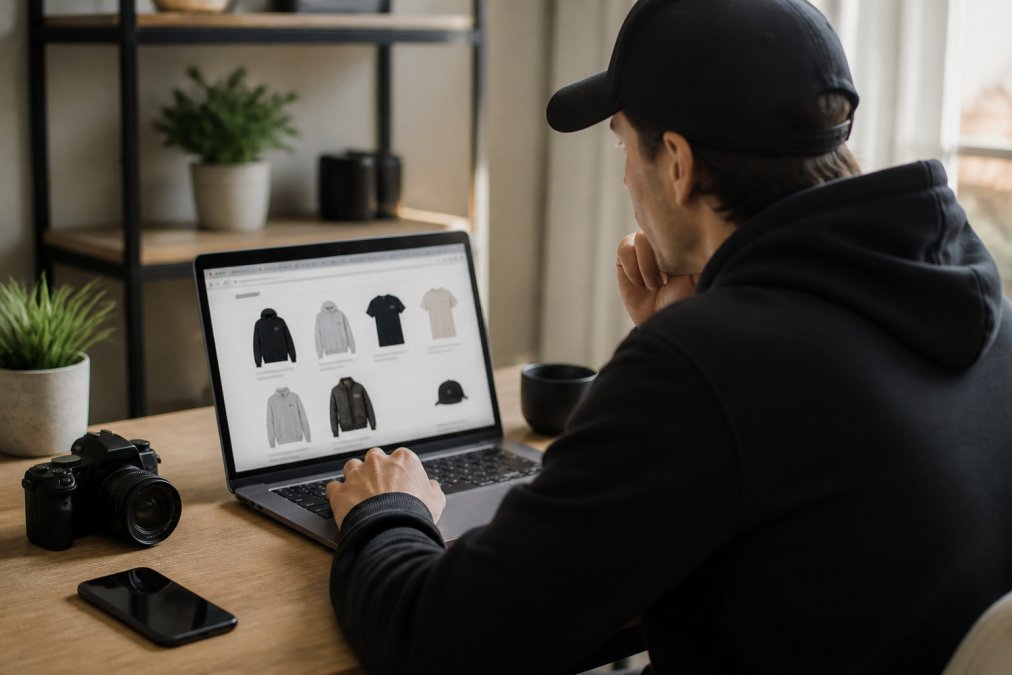
Brand-owned drops. The brand sets the quantity, the price, and the timing. This is where you get the lowest price and the clearest authenticity signal, because the piece ships from the maker. The trade-off is that you carry the full risk if the fit is wrong, and returns are governed by the brand's own policy.
Curated platforms. A good platform vets labels before listing them, which saves you the authentication work later. The trade-off is that the platform takes a cut, so prices run higher than buying direct. When evaluating a platform, check whether it publishes its vetting criteria, whether it names the labels it carries, and whether it offers buyer protection on resale listings.
Pop-ups and in-person events. These are announced with the shortest lead time and often sell through in a single day. The practical move is to follow the brand's social account and turn on post notifications for the week a drop is expected, then arrive early. Some pop-ups release a limited quantity per person, which is worth asking about before you queue.
How to Track Limited Edition Releases
Tracking limited edition releases is a system, not a habit. The shoppers who consistently land pieces are not refreshing more often, they are watching fewer, better signals and acting on them faster.
| Signal | What It Tells You | How Often to Check |
|---|---|---|
| Brand newsletter | First access, sometimes early links | Weekly |
| Brand social account | Drop teasers, restock notices | Every few days |
| Curated platform new-arrivals page | Vetted labels entering the market | Weekly |
| Trade show calendar | Upcoming labels before retail | Seasonally |
| Brand waitlist or raffle page | High-demand pieces with controlled access | Per drop |
Pick two signals and ignore the rest. Checking five channels daily burns time without improving your odds.
A few mechanics that separate a tracked drop from a missed one:
- Calendar the season, not the day. Most brands release on a predictable seasonal rhythm even when the exact date is unannounced. Block the month, then watch for the specific date.
- Screenshot the product page when it goes live. If a piece sells out and the listing is pulled, your screenshot is the record of the size, colorway, and price.
- Set a price ceiling before the drop, not during it. Drop-day urgency is the single biggest driver of overspending on limited releases.
- Check the restock window. Many brands restock once, usually within two to four weeks, then retire the piece permanently.
How to Verify Authenticity Before You Buy
Verifying authenticity before purchase protects both your money and your wardrobe. Counterfeits have moved well beyond obvious tells, so the old advice about checking stitching quality no longer holds up on its own.
The Federal Trade Commission guidance on counterfeit goods explains that counterfeit products are illegal to sell and that buyers have limited recourse once money changes hands. That is the real risk: not a bad purchase, but no purchase at all.
Technical Authentication Methods
Best Big and Tall Clothing Brands to Watch
Big and tall shoppers face a specific problem: most brands that claim extended sizing carry a token handful of items and call it a range. That is not a range. A real big and tall offering covers the same silhouettes, colors, and fits as the core line.
When evaluating any brand for extended sizing, check three things:
- Depth. Count how many styles exist in your size, not just whether your size appears.
- Consistency. Confirm the same fabric and construction as the standard sizes.
- Restock frequency. A brand that restocks extended sizes is committed. One that sells through and never returns is not.
World of Dreamy carries a Big & Tall category alongside its standard fits, so you are not hunting across three sites for the family's clothing. That single-cart convenience matters more than most shoppers expect until they have tried it.
Secondary Market and Archival Sourcing
The secondary market is where genuinely rare pieces surface, and archival sourcing is the discipline of buying them deliberately rather than impulsively. Runway pieces from past seasons, discontinued colorways, and sample garments rarely appear on primary retail at all.
The Smithsonian's fashion and costume collections show how much design history sits outside current retail, which is exactly why archival pieces hold value. Approach this market with a plan:
- Define the specific piece or era you want.
- Set a hard price ceiling before you start bidding.
- Request provenance documentation, not just photos.
- Use a payment method with buyer protection.
- Budget for cleaning and any restoration separately.
Conclusion
Finding exclusive clothing collections takes patience, a couple of reliable signals, and a willingness to verify before you buy. Most shoppers lose out because they rely on the same crowded channels everyone else uses, then wonder why everything sells out.
World of Dreamy makes that search easier by keeping limited releases, extended sizing, and everyday essentials in one place. The Dreamy Origins collection drops one city-inspired design each month, the Big & Tall range carries real depth rather than token items, and the current 25% discount applies across the catalog. Start with the Dreamy Origins Las Vegas tee and see how a limited run should feel.

Frequently Asked Questions
What defines an exclusive clothing collection?
An exclusive clothing collection is a limited-run line produced by a brand or fashion house, often with restricted quantities, unique designs, and premium materials. These collections typically feature craftsmanship, brand heritage, and aesthetic alignment that mass-market apparel lacks. Limited edition clothing drops create scarcity, which drives demand and makes pieces feel like investment pieces rather than everyday purchases.
Where can I find limited edition clothing drops?
Limited edition clothing drops happen on brand websites, curated retail platforms, and through exclusive access lists. Sign up for brand newsletters, follow fashion houses on social media, and check platforms that specialize in curated selections. Some brands release drops monthly, like the Dreamy Origins collection, which highlights different cities with limited-run graphic tees priced at $55. Set calendar reminders for known drop dates.
How do I verify the authenticity of exclusive fashion items?
Check stitching quality, label placement, serial numbers, and material weight. Many high-end brands include authentication tags or QR codes. For secondary market purchases, request original receipts or proof of purchase. Technical methods include UV light tests on certain fabrics and comparing hardware weight to known genuine pieces. If a price seems far below retail for a limited edition item, treat it as a red flag and walk away.
Are exclusive clothing collections worth the investment?
Exclusive pieces often hold value better than mass-produced apparel because of limited supply and brand prestige. Investment pieces from established fashion houses can resell for more than retail if kept in good condition. The real value depends on wearability and personal style identity. A $55 limited edition tee you wear weekly delivers more value than a $500 piece that sits in the closet. Buy what fits your wardrobe staples and lifestyle.
Leave a comment