

How to Find Accurate Clothing Sizes Online
Table of Contents
- Why Sizing Varies Between Manufacturers
- How to Measure Body for Clothing Accurately
- How to Read Size Charts Online
- Accounting for Fabric Stretch and Material Composition
- Best Practices for Online Clothing Shopping
- Finding Accurate Clothing Sizes for Your Body Type
- Conclusion
Last Updated: August 23, 2026
Why Sizing Varies Between Manufacturers
A medium from one brand might fit like a small from another. This inconsistency isn't random, different manufacturers use different pattern blocks, fabric suppliers, and production facilities. A brand manufacturing in Vietnam may have entirely different sizing standards than one producing in Turkey.
Vanity sizing compounds the problem. Many retailers deliberately size garments larger than traditional measurements to make customers feel better about their size. A "small" today might have the same actual dimensions as a "medium" from fifteen years ago (peer-reviewed research). This practice varies wildly across the industry, which means relying on your usual size is a gamble when shopping across different brands online.
At World of Dreamy, some brands cut generous, others cut tight, which is why checking garment dimensions before checkout is essential.
How to Measure Body for Clothing Accurately
Essential Measurement Points
Accurate body measurements are the foundation of finding accurate clothing sizes online. You need five core measurements: bust circumference, waist measurement, hip measurement, inseam, and shoulder width.
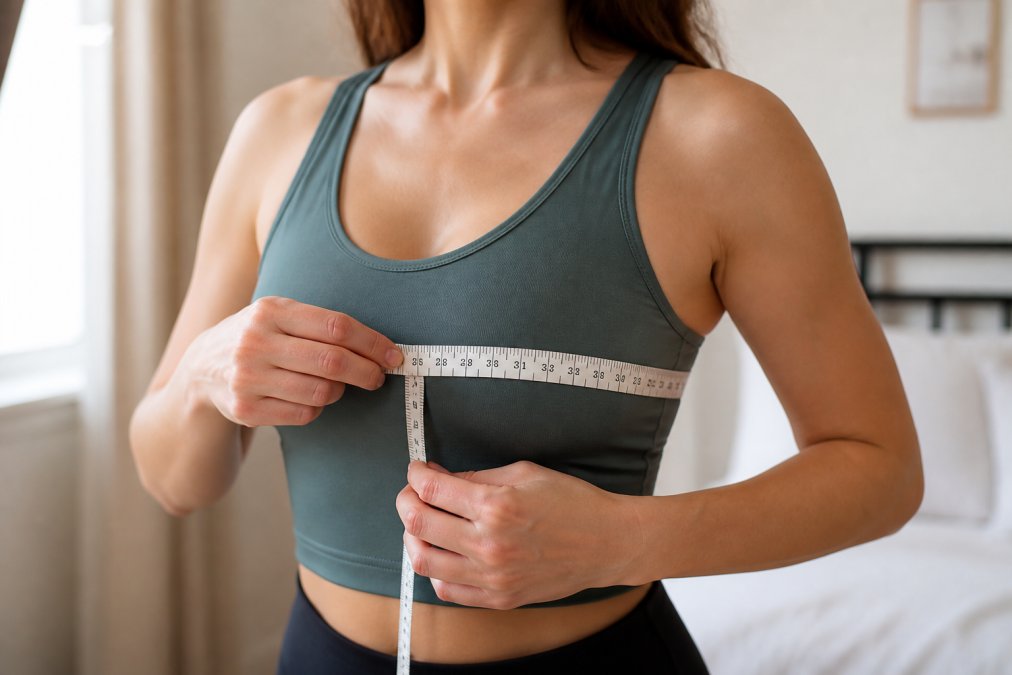
Start with bust circumference. Measure around the fullest part of your chest, keeping the tape parallel to the ground. The tape should sit snugly but allow one finger to slip underneath.
Waist measurement comes next. Find your natural waist, which sits above your hip bones but below your rib cage. Measure without sucking in your stomach.
Hip measurement requires measuring around the fullest part of your hips and buttocks with feet together. This determines whether pants will fit through the seat and thighs.
Inseam measures the inside length of your leg from your crotch to your ankle. Wear the shoes you'll typically pair with the garment, as heels add height.
Shoulder width matters for tops and jackets. Measure from the top of one shoulder bone to the top of the other.
Using a Flexible Measuring Tape Correctly
A flexible measuring tape is essential for accurate measurements. Hold the tape loosely, not tight or slack. The tape should follow your body's contours without compressing the skin underneath.
Keep the tape parallel to the ground when measuring bust, waist, and hips. For length measurements like inseam and shoulder width, stand straight and still. Record measurements in inches and write them down immediately.
How to Read Size Charts Online
Comparing Your Measurements to Standard Charts
Every legitimate retailer provides a size chart. Most shoppers ignore it, then get surprised when the garment arrives too tight or too loose.
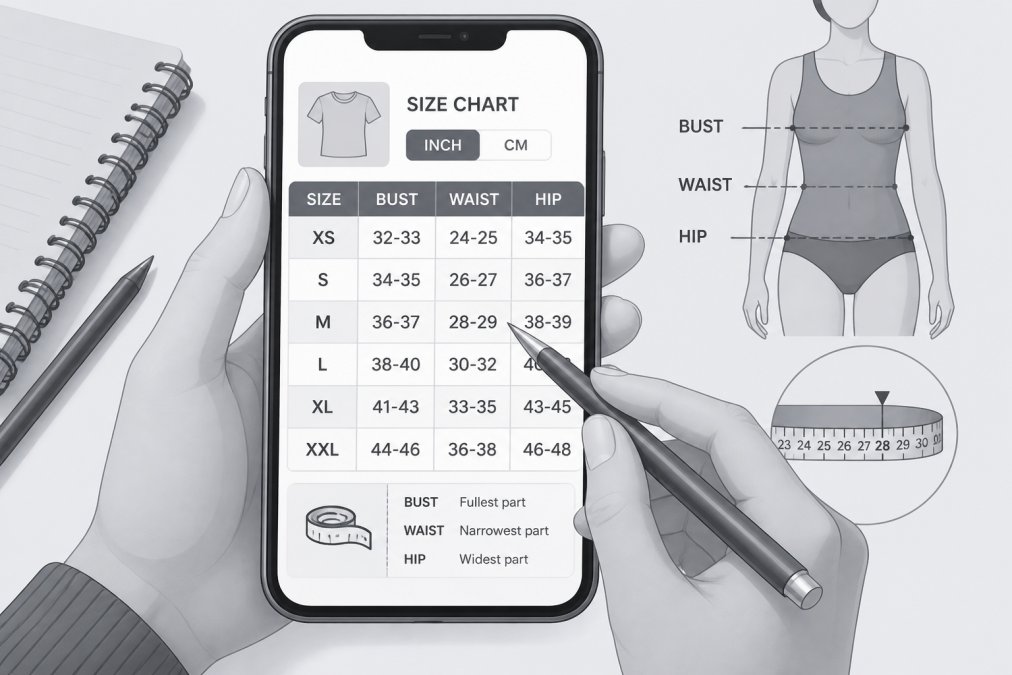
Locate the size chart on the product page. It should show garment dimensions, the actual measurements of the clothing piece itself, not body measurements. Compare your body measurements to these garment dimensions.
Match your largest measurement first. If your bust is 38 inches and your waist is 32 inches, start by finding a size that accommodates the 38-inch bust. You can usually take in a waist with tailoring, but you can't add fabric to the bust if it's too tight.
Check the fit preference notes. Some size charts mention whether the fit runs generous, true-to-size, or tight. This qualitative data is as important as the numbers.
Understanding Garment Dimensions vs Body Measurements
Your body measurements and garment dimensions are different numbers. Your body measurements are what you measured with the tape. Garment dimensions are the actual measurements of the clothing piece.
A shirt labeled size medium might measure 38 inches across the bust (measured flat, armpit to armpit, then doubled). That 2-inch difference is the wearing ease, the extra room built into the garment so it doesn't cling to your body.
Wearing ease varies by garment type and style. A fitted dress needs less ease than a loose button-up shirt. Always check whether the size chart measurements are taken flat or on the body. Most retailers measure flat.
Accounting for Fabric Stretch and Material Composition
Cotton behaves differently than spandex. Natural fibers like cotton and linen have minimal stretch and shrink when washed (the FDA). Synthetic blends with elastane or spandex have significant stretch and will feel more forgiving than 100% cotton, even if dimensions are identical.
Base layers and compression garments use fabric with intentional negative ease. They measure smaller than your body because they're meant to fit snugly. Ordering your normal size in compression wear results in something uncomfortably tight.
Check the material composition before finalizing your purchase. If the garment is a blend you've never worn, search product reviews for comments about stretch and fit. Weight and drape matter too, heavier fabrics maintain their shape better; lighter fabrics cling more to your body.
Best Practices for Online Clothing Shopping
Reading Garment Measurement Guides Before Checkout
Before you click buy, cross-check three things: your body measurements, the garment dimensions from the size chart, and the material composition.
Pull up your recorded body measurements. Find the size chart on the product page. Compare your bust measurement to the garment's bust dimension. If your bust is 36 inches and the medium measures 38 inches across, that 2-inch difference is your wearing ease. Repeat for waist and hip measurements. Read the material composition. Check customer reviews for fit notes. Only then select your size and proceed to checkout.
This process takes less than two minutes and eliminates most sizing disasters.
Handling Size Discrepancies and Returns
Sometimes you follow every step correctly and the garment still doesn't fit right. Check the return policy before buying. Most retailers offer returns within 30 days.
When a garment arrives and doesn't fit, try it on immediately. Document the problem with photos if needed. For minor fit issues, consider tailoring instead of returning. A waist that's an inch too large is a $15-20 tailoring job. A sleeve that's half an inch too long costs $10-15 to hem.
Keep your measurements and notes about which brands fit your body well. After ordering from any retailer multiple times, you'll develop a sense of how their sizing compares to your body.
Finding Accurate Clothing Sizes for Your Body Type
Body shape affects how garments fit. If you carry weight in your chest, prioritize the bust measurement. You can take in excess fabric at the waist with tailoring, but you can't add fabric to the bust.
If you're curvier through the hips, check the hip measurement carefully. Many standard size charts underestimate hip room. Look for brands that specifically mention generous hip room or offer pear-shaped sizing.
Taller or shorter bodies need special attention to length measurements. If you're under 5'4" or over 5'10", you'll almost always need to adjust length through tailoring or by seeking brands that offer petite or tall sizing.
Broad shoulders might require sizing up in tops to accommodate shoulder width. World of Dreamy offers Big & Tall options because accurate clothing sizes online means acknowledging that bodies come in different shapes and proportions.
Conclusion
Finding accurate clothing sizes online comes down to three habits: knowing your body measurements, checking size charts before purchasing, and understanding how fabric composition affects fit.
The inconsistency you've experienced with online sizing isn't your fault, it's the reality of an industry where thousands of manufacturers use different standards. But you can work within that system by doing the verification work upfront instead of gambling on returns.
World of Dreamy offers a diverse collection of apparel and accessories. Our detailed size charts show garment dimensions for every piece. With our current 25% discount offer, you can build a wardrobe you trust without overspending. Start by taking your measurements today, then browse our collection with confidence knowing exactly what will fit your body.
Federal Trade Commission guidelines on sizing standards recommend that retailers provide accurate garment measurements, though enforcement remains inconsistent across the industry.
| Body Measurement | How to Measure | Why It Matters |
|---|---|---|
| Bust circumference | Around fullest part of chest | Determines top and dress fit |
| Waist measurement | At natural waist, above hips | Affects how bottoms sit |
| Hip measurement | Around fullest part of hips | Critical for pants and skirt fit |
| Inseam | Inside leg from crotch to ankle | Determines pant and skirt length |
| Shoulder width | Bone to bone across shoulders | Affects sleeve and jacket fit |
Frequently Asked Questions
Q: How do I measure my body correctly for online clothing purchases?
A: Use a flexible measuring tape and wear fitted clothing or undergarments. Measure your bust circumference by wrapping the tape around the fullest part of your chest, keeping it snug but not tight. For your waist, measure at the narrowest point, usually just above your navel. For hips, measure around the fullest part of your hip area. Take measurements while standing straight with your arms at your sides. Record all measurements in inches and compare them to the retailer's size chart before ordering.
Q: Why do clothing sizes vary so much between different brands?
A: Vanity sizing, different manufacturing standards, and varied fit preferences cause significant size discrepancies across brands. Some manufacturers cut garments larger to appeal to customers, while others follow tighter silhouettes. International brands may use different standardized sizing systems. Garment construction methods, fabric composition, and the intended fit style all influence how a size is cut. This is why relying on body measurements and size charts rather than just grabbing your usual size is essential for finding accurate clothing sizes online.
Q: What should I do if my measurements fall between two sizes?
A: First, check the specific garment's measurement guide, some styles run large or small. If the fit guide doesn't clarify, consider the garment type: fitted styles usually benefit from sizing up, while looser silhouettes work better sized down. Check customer reviews for fit feedback, as real shoppers often mention if an item runs small or large. If you prefer a snug fit, size down; if you prefer room for layering or movement, size up. Always verify the return policy before ordering to protect yourself.
Q: How can I tell if a garment will fit based on the fabric description?
A: Fabric stretch and material composition directly affect how a garment fits. Natural fibers like cotton have minimal stretch and fit true to size, while blended fabrics with elastane offer more give. Knit fabrics typically stretch more than woven materials. If a garment is 95% cotton with 5% elastane, expect minimal stretch; if it's 85% polyester with 15% spandex, expect more flexibility. Review the rise measurement for pants and shoulder width for tops, as these dimensions vary widely. Always check if the fabric is pre-shrunk, especially for cotton items.
This article was written using GrandRanker
Leave a comment