

Boohoo vs J.Crew for Trendy Clothing: Which Wins in 2026?
Table of Contents
- Boohoo vs J.Crew: Price, Fabric, and Ethical Trade-Offs at a Glance
- The Real Cost of Fast Fashion: Cost-Per-Wear and Garment Longevity
- Is Fashion Nova Good for Quality? What It Reveals About the Trendy Clothing Market
- Fabric Composition Breakdown: Natural Materials vs Synthetic Fibers
- How to Build a Capsule Wardrobe on a Budget Using Both Brands
- Which Brand Wins for Your Wardrobe? A Decision Framework
- Conclusion: Choosing Between Boohoo vs J.Crew for Trendy Clothing
- Frequently Asked Questions
Last Updated: September 10, 2026
Boohoo vs J.Crew: Price, Fabric, and Ethical Trade-Offs at a Glance
The boohoo vs jcrew for trendy clothing debate comes down to a single question: do you want volume or longevity? Boohoo wins on price and trend speed, J.Crew wins on fabric quality and staying power. This guide from World of Dreamy breaks down cost-per-wear, fabric composition, and ethical trade-offs so you can decide with your eyes open.
Here's the tension most comparisons skip. Boohoo's model depends on fast-paced production and constant new drops, which keeps prices low but shortens garment longevity. J.Crew builds seasonal collections around durable construction and classic aesthetic pieces. Neither approach is wrong; they simply serve different wardrobes.
Below, we'll show you how to calculate cost-per-wear for both brands, how each fits into a capsule wardrobe, and where the ethical trade-offs actually land.
| Factor | Boohoo | J.Crew |
|---|---|---|
| Price point | Budget-friendly | Mid-to-premium |
| Fabric focus | Synthetic fibers | Natural materials |
| Trend speed | Very fast | Moderate |
| Best for | Trend-driven shoppers | Wardrobe staples |
| Longevity | Lower | Higher |
The Real Cost of Fast Fashion: Cost-Per-Wear and Garment Longevity
Cost-per-wear is the price of a garment divided by how many times you actually wear it. A low sticker price means nothing if the item falls apart after three washes.
Many shoppers compare tags, not lifespans. A trend-driven top that costs little but lasts one season can end up costing more per wear than a tailored J.Crew piece worn weekly for years. That's the trap of fast fashion: it feels cheap at checkout and expensive over time.
To run the math yourself:
- Estimate how many wears you'll realistically get
- Divide the purchase price by that number
- Compare across brands before you buy
A common mistake is assuming higher price always means better value. It doesn't. A mid-priced natural-fiber garment you wear constantly beats a premium synthetic piece that pills after a month.
Is Fashion Nova Good for Quality? What It Reveals About the Trendy Clothing Market
Is Fashion Nova good for quality? Generally, no, and the reason matters more than the verdict. Reviews consistently describe thin synthetic fabrics, inconsistent sizing, and seams that fail within a few washes. That pattern is not unique to one label; it is the signature of trend-driven mass production, and it explains the entire spectrum that Boohoo and J.Crew sit on.
Think of the trendy clothing market as a quality ladder:
- Extreme low end (Fashion Nova): ultra-fast drops, mostly polyester and spandex, minimal quality control. Sticker prices are the lowest, but garment lifespan is often measured in a single season.
- Low-to-mid (Boohoo): similar speed, slightly better fabric sourcing and fit consistency. Still synthetic-heavy, but a step up in construction.
- Mid-to-premium (J.Crew): slower seasonal cycles, natural and blended-natural fabrics in core pieces, and construction built to survive years of washing.
The lesson is not that any one brand is 'bad.' It is that the market rewards speed over durability, and the shopper pays for that trade-off either at checkout or at replacement. A $25 top worn four times costs about $6.25 per wear. A $90 top worn 60 times costs about $1.50 per wear. The cheaper tag loses on value even though it wins on price.
Here is how to spot the low end before you buy, regardless of brand:
- Check the fiber percentages, not just the fiber names. 'Polyester blend' can mean 95% polyester or 40%. The number is what predicts pilling and heat retention.
- Look at the seam allowance and hem width. Narrow, single-stitched hems and exposed serging are the cheapest construction shortcuts.
- Squeeze the fabric and release. If it creases sharply and stays creased, it is likely high-synthetic and prone to looking worn fast.
- Read the care label. 'Hand wash only' or 'dry clean' on a fast-fashion piece usually signals a fiber that will not survive a normal laundry cycle.
For the boohoo vs jcrew decision, that framing is the whole point: you are not choosing between good and bad, you are choosing where on the ladder you want to stand, and how often you are willing to climb it again.
Fabric Composition Breakdown: Natural Materials vs Synthetic Fibers
Fabric composition is the single biggest predictor of how a garment ages. Natural materials like cotton, linen, and wool breathe, hold shape, and resist pilling (the FTC). Synthetic fibers like polyester and acrylic are cheaper to produce, which is why fast fashion relies on them.
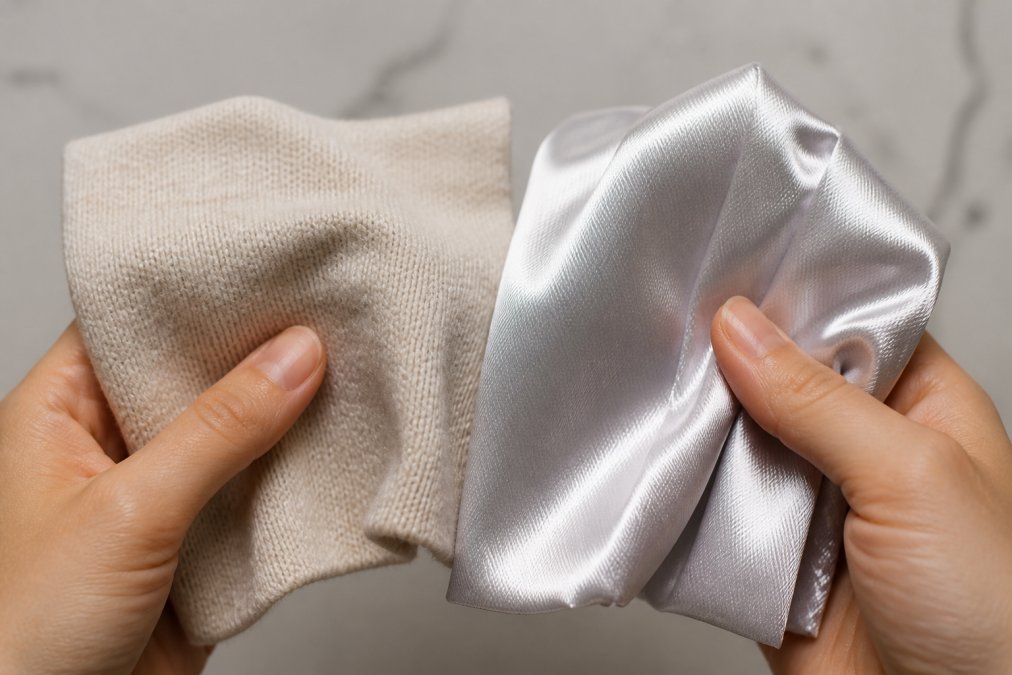
J.Crew leans heavily on natural and blended natural fabrics in its core pieces, which supports garment longevity and a classic aesthetic. Boohoo's trend-driven drops lean synthetic because it's faster and cheaper to produce at scale.
Here's the practical test. Check the label before you buy:
- 100% cotton, linen, or wool: ages well, costs more
- Cotton-synthetic blends: middle ground, decent durability
- Mostly polyester or acrylic: cheapest, shortest lifespan
The Federal Trade Commission's textile labeling guidance requires brands to disclose fiber content, so you can always check before committing. If a listing hides its composition, treat that as a warning sign.
How to Build a Capsule Wardrobe on a Budget Using Both Brands
How to build a capsule wardrobe on a budget: anchor it with durable J.Crew staples, then layer in a small number of Boohoo trend pieces. That mix gives you versatility and style longevity without overspending, but the ratio is what makes it work, and almost no comparison article quantifies it.
A practical split most stylists land on is roughly 70% staples, 30% trend. The staples are the pieces you wear weekly and expect to keep for years. The trend pieces are the accents you rotate out each season without guilt. If you invert that ratio, you get a closet that looks current but constantly needs replacing, the exact trap the cost-per-wear math warns about.
Here is a workable starter capsule with quantities and brand assignments:
- 2 pairs of quality denim, J.Crew. Denim is high-wear and high-abuse; natural and blended-natural fabrics hold shape far longer than synthetic stretch blends.
- 3 tops in neutral tones, J.Crew for at least two. Neutrals (white, navy, gray, black) survive trend cycles and pair with everything.
- 1 tailored blazer or jacket, J.Crew. Structure and lining are where cheap construction shows first.
- 2 trend pieces refreshed each season, Boohoo. This is where the brand earns its place: low commitment, high novelty, no expectation of a five-year lifespan.
- 1 pair of statement shoes or a bag, either brand, depending on budget. Accessories carry trend energy without the fit and durability risk of apparel.
The mechanism is simple: every staple you buy from J.Crew reduces the number of times you have to repurchase that category. Every trend piece you buy from Boohoo keeps you from spending staple money on something you will only wear a handful of times.
One more rule that keeps the system honest: replace, do not accumulate. When a Boohoo trend piece wears out or goes out of style, it leaves the closet before a new one enters. That keeps the 70/30 ratio intact and stops the trend layer from quietly becoming the whole wardrobe.
Which Brand Wins for Your Wardrobe? A Decision Framework
The winner depends on your habits, not a universal ranking. Use this framework to decide fast.
If you wear an item weekly and want it to last, choose J.Crew. If you want to test a trend without commitment, choose Boohoo.
For families shopping across sizes and categories, one-stop convenience matters too. World of Dreamy carries apparel and accessories for men, women, and children, including Big & Tall options and the Dreamy Origins collection, with a current 25% discount offer.
| Your Priority | Best Choice |
|---|---|
| Lowest upfront price | Boohoo |
| Fabric quality and longevity | J.Crew |
| Trend experimentation | Boohoo |
| Capsule wardrobe staples | J.Crew |
| Family shopping in one place | World of Dreamy |
Conclusion: Choosing Between Boohoo vs J.Crew for Trendy Clothing
The boohoo vs jcrew for trendy clothing choice isn't about picking a side; it's about matching the brand to the job. Boohoo delivers speed and low prices for trend-driven pieces. J.Crew delivers durable construction and classic aesthetic value that holds up over years.
If you're tired of juggling multiple sites for the whole family, World of Dreamy offers a diverse selection of apparel and accessories for men, women, and children, plus a 25% discount offer and the exclusive Dreamy Origins collection. Get started with World of Dreamy and build a wardrobe that fits your budget.
Frequently Asked Questions
Is Boohoo considered a fast fashion brand?
Yes. Boohoo operates on a fast-paced production model with trend-driven seasonal collections, frequent new drops, and low price points. That approach keeps up with trends but often relies on synthetic fibers and short garment longevity. If you want pieces that survive more than a few washes, you will need to check fabric composition and care instructions before buying.
What is J.Crew style called, and how does it compare to Boohoo?
J.Crew is known for a classic aesthetic: tailoring, wardrobe staples, and natural materials like cotton and wool. Boohoo leans trend-driven, with bold prints and fast turnover. If you want versatility and style longevity, J.Crew fits better. If you want the newest look at a budget-friendly price, Boohoo is the faster option.
How do return policies differ between Boohoo and J.Crew?
Both brands accept returns, but the windows and conditions differ. Boohoo typically requires items to be unworn with tags and returned within a set period, while J.Crew often allows returns within a similar window but may exclude final-sale items. Always check the current policy before ordering, especially for trend-driven pieces you are unsure about.
Is J.Crew worth the higher price point for everyday wear?
It depends on how often you wear the item. A J.Crew blazer or pair of pants may cost more upfront, but a lower cost-per-wear over years of use can make it cheaper than a fast-fashion alternative that falls apart after a season. If you wear it weekly, the price-to-quality ratio usually favors J.Crew.
Leave a comment