

Affordable Clothing Brands That Support Charities
Table of Contents
- Why Affordable Clothing Brands That Support Charities Are Worth Your Attention
- How to Identify Ethical Fashion Brands Before You Buy
- Ethical Clothing Brands on a Budget: 8 Picks That Give Back
- Price-to-Impact Ratio: How Much of Your Dollar Reaches the Cause
- The Real Impact of Charitable Fashion Purchases
- Building a Budget-Friendly Capsule Wardrobe With Purpose
- Affordable Clothing Brands That Support Charities: What to Avoid
- Conclusion
Last Updated: August 21, 2026
Why Affordable Clothing Brands That Support Charities Are Worth Your Attention
Affordable clothing brands that support charities are rewriting what it means to shop with intention. Conscious consumerism has shifted from niche preference to genuine purchasing priority, and the appeal is clear: your dollar covers both a quality garment and a meaningful donation to a cause you care about.
The problem is that most guides list brands without explaining how much of your purchase price actually reaches the cause, whether the charity is legitimate, or whether the clothing will last. This guide fills that gap.
Ethical fashion is not a monolith. Some brands donate a fixed percentage of profits. Others run cause-specific product lines where all proceeds go directly to a nonprofit partner. Still others build social enterprise models where fair wages and community development are embedded in manufacturing. Knowing the difference matters before you spend.
Below, you'll find eight picks that give back, a framework for verifying charity status before you buy, a price-to-impact breakdown, and a practical approach to building a conscious wardrobe without blowing your budget.
How to Identify Ethical Fashion Brands Before You Buy
Ethical fashion is the practice of sourcing, manufacturing, and selling clothing in ways that minimize harm to people, animals, and the environment while actively supporting social good. For shoppers, it translates to three concrete checkpoints: verified charity partnerships, supply chain transparency, and fair trade certifications.
Verification of Charity Status: What to Look For
Before any purchase, confirm that the brand's nonprofit partner is a registered 501(c)(3) organization. The IRS Tax Exempt Organization Search tool lets you verify any charity's status in seconds. A brand that names a charity but cannot provide a registration number is waving a red flag.
Beyond legal status, look for:
- Impact reporting: Does the brand publish annual donation totals or beneficiary numbers? Vague language like "a portion of proceeds" without a dollar figure or percentage is a warning sign.
- Named partnerships: Legitimate cause-driven apparel brands name their nonprofit partners explicitly, not generically.
- Donation mechanism: Is it a percentage of sale price, a flat donation per unit, or all proceeds? Each model produces different outcomes for the charity.
Always verify before you buy rather than assuming good marketing equals meaningful impact.
Supply Chain Transparency and Fair Trade Certifications
Supply chain transparency means a brand publicly discloses where its materials are sourced, where garments are manufactured, and what workers are paid. The Fair Trade USA certification standards provide one of the most recognized frameworks for verifying ethical manufacturing in the apparel industry.
What to look for on a brand's website:
- Factory names and locations listed publicly
- Worker wage disclosures or third-party audits
- Organic cotton or eco-friendly materials certifications such as GOTS (Global Organic Textile Standard)
- Membership in recognized fair trade or B Corp networks
Brands that publish this information openly are inviting accountability.
Ethical Clothing Brands on a Budget: 8 Picks That Give Back
The best ethical clothing brands on a budget combine accessible pricing with verified charitable partnerships and decent construction quality. This list prioritizes brands where the give-back model is clear, the price point is realistic, and the clothing is built to last.
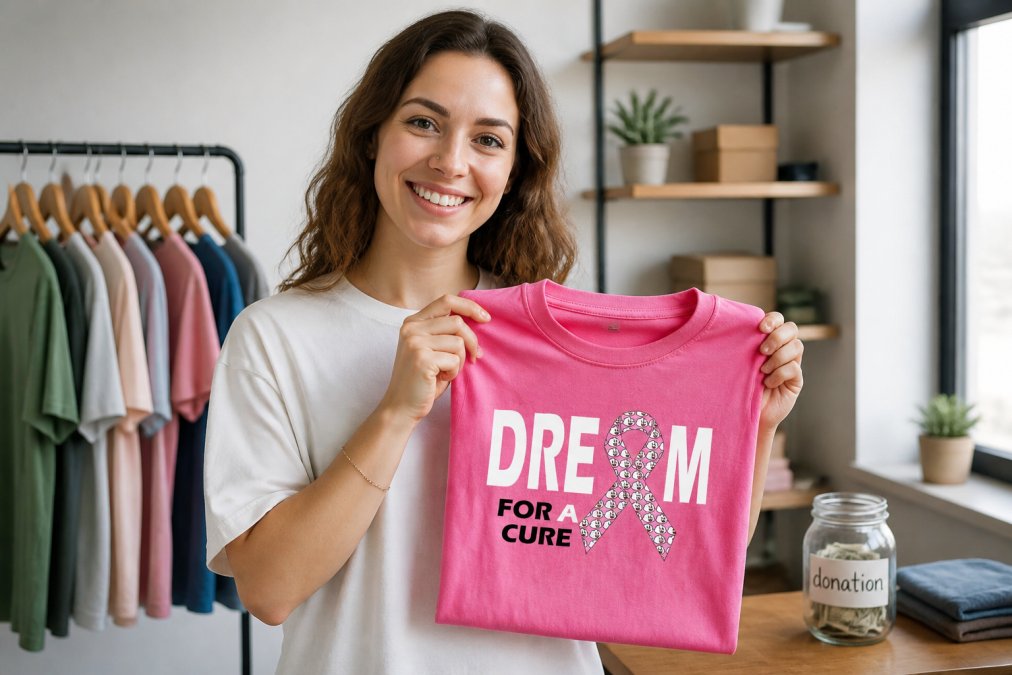
1. World of Dreamy: Cause-Driven Apparel at Accessible Prices
World of Dreamy leads this list because its give-back model is product-specific, not vague. The Breast Cancer Awareness T-Shirt is priced at $25.00, and all proceeds are donated to the Susan G. Komen Foundation. The Autism Awareness 2023 T-Shirt retails at $31.00 and supports autism acceptance awareness. Both pieces are graphic tees designed to start conversations while directing funds to named causes.


What separates World of Dreamy is the breadth of its catalog. Beyond awareness apparel, the store carries swimwear, hoodies, headwear, and Big & Tall options, making it a practical one-stop shop for families who want to shop with purpose. The current 25% discount offer makes the price-to-impact ratio even more favorable for budget-conscious shoppers.
2. Patagonia
Patagonia is the benchmark for environmental stewardship in apparel. The brand donates a percentage of sales to environmental causes and operates its own grant program for grassroots environmental organizations. Its Worn Wear program actively encourages repair rather than replacement. Entry-level fleece and base layers are available under $50.
3. Pact
Pact focuses on organic cotton and fair trade certified manufacturing. Every garment is made in Fair Trade USA certified factories, and the brand publishes its factory list publicly. Basics like tees and leggings start under $30.
4. Tentree
Tentree plants ten trees for every item purchased, with a verifiable tracking system. The brand uses eco-friendly materials including organic cotton, recycled polyester, and TENCEL. Prices for basics start around $35.
5. Thought Clothing
Thought builds its entire line around sustainable sourcing and natural fibers including bamboo, hemp, and organic cotton. The brand is a certified B Corporation, meeting rigorous social and environmental standards verified by a third party. Many pieces are under $60.
6. Known Supply
Known Supply prints the name of the worker who made each garment on the label. The brand works directly with artisan groups in developing communities, creating transparent profit-sharing with the people in its supply chain. T-shirts and basics start under $40.
7. Cotopaxi
Cotopaxi donates a percentage of revenue to humanitarian aid organizations and publishes an annual impact report. The brand uses repurposed and recycled materials. Gear and apparel start around $35.
8. Noonday Collection
Noonday partners with artisan businesses in vulnerable communities worldwide, creating market access and fair wages as its primary social impact mechanism. Many items are under $50.
| Brand | Give-Back Model | Starting Price | Key Certification |
|---|---|---|---|
| World of Dreamy | All proceeds to named charities | $25.00 | Named nonprofit partners |
| Patagonia | % of sales + grants | ~$45 | B Corp, 1% for the Planet |
| Pact | Fair trade manufacturing | ~$25 | Fair Trade USA, GOTS |
| Tentree | 10 trees per purchase | ~$35 | B Corp, verified planting |
| Thought Clothing | Sustainable sourcing | ~$40 | B Corp |
| Known Supply | Direct artisan profit-sharing | ~$38 | Transparent supply chain |
| Cotopaxi | % revenue to humanitarian aid | ~$35 | B Corp, impact reports |
| Noonday Collection | Artisan community wages | ~$40 | Direct trade |
Note: Prices for brands other than World of Dreamy are approximate ranges based on publicly available information and may change. Always verify current pricing on the brand's website.
Price-to-Impact Ratio: How Much of Your Dollar Reaches the Cause
The price-to-impact ratio is the proportion of a garment's purchase price that actually transfers to the charitable cause, after production costs, overhead, and retail margins.
The ratio varies dramatically by give-back model:
- All-proceeds models (like World of Dreamy's awareness tees) deliver the highest ratio because the entire sale price, after production cost, goes to the charity.
- Percentage-of-revenue models typically donate between 1% and 10% of the sale price.
- Per-unit donation models donate a fixed amount regardless of price, which can be more predictable but may be a small fraction of the purchase price.
- Impact-through-manufacturing models (like Known Supply or Noonday) embed social impact in fair wages and community development rather than traditional donations.
If maximizing direct charitable donation per dollar spent is your goal, all-proceeds models and high-percentage-of-revenue models are your best options. If you value systemic change through ethical manufacturing, impact-through-production models deserve equal consideration.
The Real Impact of Charitable Fashion Purchases
When you buy an awareness tee, you are funding research or programs and wearing a conversation starter that extends the cause's reach. The Susan G. Komen Foundation, for example, uses donated funds for breast cancer research grants, community health programs, and patient navigation services.
Conscious consumerism, when practiced at scale, shifts market incentives. Brands that see strong sales from cause-driven lines invest more in those lines. Your purchasing decision is a vote for the kind of apparel industry you want to exist.
Individual purchases are not a substitute for systemic change. The Textile Exchange annual fiber and materials report consistently documents that organic and recycled fiber adoption in the apparel industry remains a small fraction of total production. Conscious shopping works best alongside advocacy and policy engagement.
Building a Budget-Friendly Capsule Wardrobe With Purpose
A conscious wardrobe does not require buying everything at once from every ethical brand. The most practical approach is a capsule wardrobe: a small, curated set of versatile pieces that cover most occasions without redundancy.
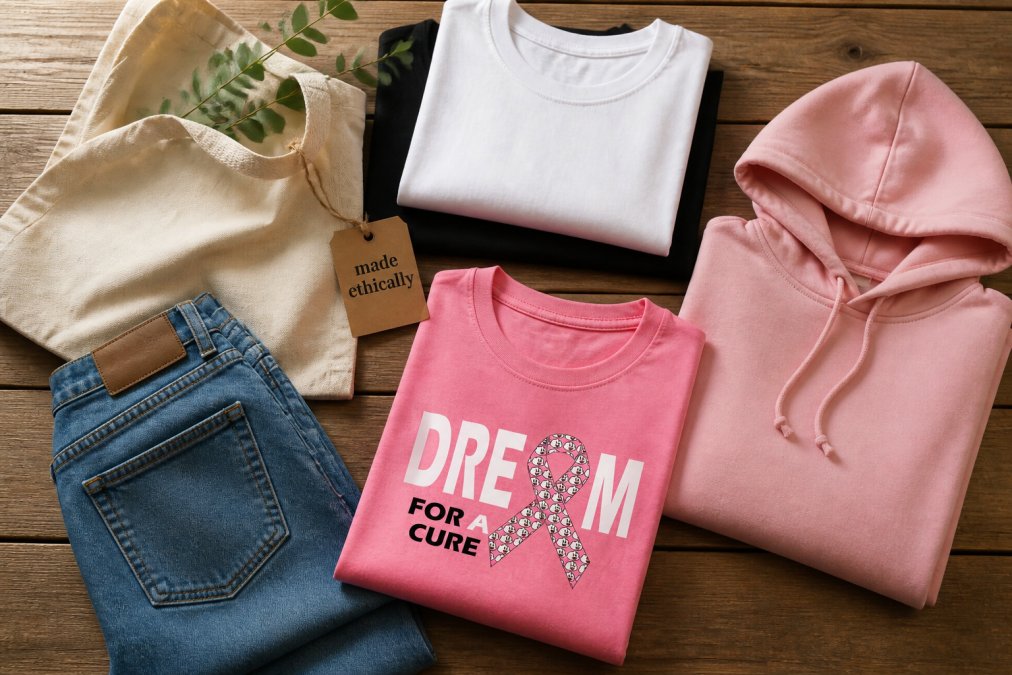
A budget-friendly capsule wardrobe built around ethical brands might look like this:
- 3 quality graphic or solid tees (including one cause-specific piece)
- 1 versatile hoodie or sweatshirt
- 1 pair of durable denim or chinos
- 1 lightweight layer or jacket
- 2-3 basics (socks, a belt, a hat)
Buy fewer, better pieces from brands whose values align with yours. This reduces waste, stretches your budget over time, and concentrates your purchasing impact.
Lifecycle and Durability: Why Cost-Per-Wear Matters
Cost-per-wear is the actual cost of a garment divided by the number of times you wear it. A $60 ethically made hoodie worn 120 times costs $0.50 per wear. A $20 fast fashion hoodie worn 15 times before it pills and fades costs $1.33 per wear.
Before buying from any affordable ethical brand, check:
- Fabric composition: Natural fibers like organic cotton and bamboo generally outlast synthetic blends.
- Construction details: Double-stitched seams, reinforced stress points, and quality hardware signal durability.
- Wash care: Garments requiring delicate handling will see fewer wears in practice.
- Fit and sizing accuracy: A garment you return or stop wearing because it fits poorly has infinite cost-per-wear.
Affordable Clothing Brands That Support Charities: What to Avoid
Affordable clothing brands that support charities are not immune to greenwashing, marketing a product as environmentally or socially responsible without substantive evidence.
Watch for these patterns:
- Vague language without specifics: "We care about the planet" is not a policy. Look for concrete commitments with measurable outcomes.
- No named charity partner: If a brand says it supports "various charities" without naming them, that is not accountability.
- No impact reporting: Legitimate give-back brands publish what they've donated, to whom, and when.
- Certifications that don't apply: Some brands display eco-friendly logos that relate to packaging, not manufacturing or labor practices.
- Cause-washing on one product: A single awareness tee does not make a brand ethical. Look at how the broader catalog is sourced and made.
The FTC Green Guides for environmental marketing claims provide the regulatory framework for what brands can and cannot claim about environmental attributes. Brands making unsubstantiated claims may be in violation of these guidelines.
A good rule of thumb: if a brand's charitable claims would embarrass them if scrutinized by a journalist, they probably do not hold up. Brands doing the real work tend to over-share impact data.
Shopping for affordable clothing brands that support charities is more rewarding when you know what to look for. The difference between a purchase that genuinely funds a cause and one that just feels like it comes down to transparency, verification, and a clear understanding of the give-back model. World of Dreamy's cause-specific awareness tees, where all proceeds go to named organizations like the Susan G. Komen Foundation, represent one of the cleaner models available at accessible price points, with the added benefit of a wide catalog covering the whole family and a current 25% discount offer. Start with one intentional purchase, verify the impact, and build your conscious wardrobe from there.
Frequently Asked Questions
Which affordable clothing brands donate a portion of proceeds to charity?
Several affordable clothing brands that support charities direct a percentage of each sale to verified nonprofits. World of Dreamy, for example, donates all proceeds from its Breast Cancer Awareness t-shirt ($25) to the Susan G. Komen Foundation, and its Autism Awareness tee ($31) raises funds for autism acceptance. Other providers in this space use profit-sharing models, give-one programs, or direct nonprofit partnerships. Always check the brand's impact reporting page to confirm how much of your purchase actually reaches the cause.
How can I verify if a clothing brand actually supports a nonprofit?
Start by searching the named charity on the IRS Tax Exempt Organization Search tool at apps.irs.gov to confirm 501(c)(3) status. Then look for the brand's impact report or annual giving statement, which legitimate mission-driven brands publish openly. Check whether the nonprofit's own website lists the brand as a partner. Vague language like 'a portion goes to charity' without a named organization or dollar amount is a red flag. Transparent brands name the charity, state the percentage, and link to third-party verification.
Do clothing brands that support charities cost more than regular brands?
Not necessarily. Many ethical clothing brands on a budget price their cause-driven items comparably to standard fast-fashion alternatives. A give-back t-shirt often runs $25-$35, which is close to what you'd pay at a mid-range retailer. The difference is that part of that price funds a charitable cause. Applying available discounts, like World of Dreamy's 25% off offer, can bring costs down further. When you factor in durability and cost-per-wear, mission-driven apparel often delivers stronger long-term value.
What is the 'buy one, give one' model in fashion, and does it actually help?
The buy-one-give-one model means for every item a customer purchases, the brand donates an equivalent product or a fixed cash amount to a person or community in need. In fashion, this often means donating clothing or school uniforms to underserved communities. The model works best when the receiving community actually needs the donated item and when the brand publishes transparent impact data. Critics note that product donations can sometimes disrupt local markets, so cash-based or community-development models are increasingly preferred by social enterprise brands focused on sustainable sourcing.
This article was written using GrandRanker
Leave a comment